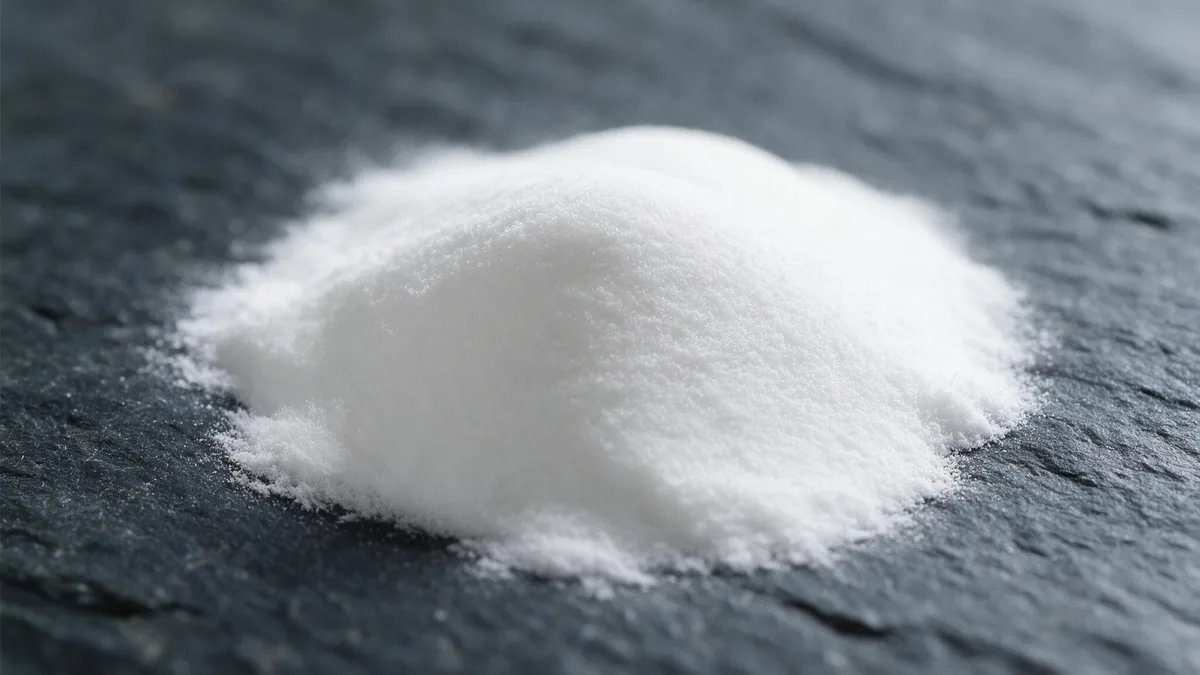
Micronised means the creatine has been mechanically ground into smaller particles. That is the whole of it. It is not a different type of creatine, it is not purer, and it does not contain more creatine per gram. It disperses faster in liquid and feels less gritty — a texture and convenience improvement, not a chemical one.
Knowing that is genuinely useful when you shop, because it tells you which claims on a label are meaningful and which are dressing.
What micronisation actually does
Standard creatine monohydrate is a crystalline powder. Micronisation puts it through a milling process that reduces the particle size, increasing the total surface area of the same amount of powder.
More surface area in contact with liquid means the powder wets and disperses faster, and the finer particles stay suspended longer before settling. In practice: less clumping at the bottom of the shaker, a smoother mouthfeel, less of that sandy texture people dislike.
The molecule is unchanged. Micronised creatine monohydrate and standard creatine monohydrate are the same compound, and a gram of either contains the same amount of creatine.
What 200-mesh means
Mesh is a particle size measure borrowed from sieving. A mesh number refers to the number of openings per linear inch in a screen the powder passes through — so a higher mesh number means a finer screen and a smaller particle.
200-mesh, which is what our packs specify, is a common benchmark for micronised creatine. Some products state a mesh number, many say only "micronised" with no figure at all. A stated number is more useful than the word alone, in the same way that a stated gram amount is more useful than "contains creatine".
Does micronised creatine absorb better?
This is the claim to be careful about, and it is worth separating into two questions.
Does it dissolve better? Somewhat — it disperses faster and settles more slowly. But it does not dissolve completely, and no creatine monohydrate does. Creatine's solubility in water is roughly 13 to 14 grams per litre at room temperature, so a 3 to 5 gram serving in a normal glass sits close to that ceiling. Micronising changes how quickly it disperses, not that ceiling.
Does more of it reach your muscle? There is no good evidence that micronised creatine produces better muscle saturation or better results than standard monohydrate. Oral creatine monohydrate is already very well absorbed — its bioavailability is high, which is a large part of why the ISSN treats it as the benchmark form against which newer, pricier versions are judged.
So the honest summary: micronising improves the drinking experience and makes it likelier you finish the whole dose rather than tipping sediment down the sink. That last point has a real, if indirect, effect on how much creatine you actually consume. It does not make the creatine itself work better.
Micronised is not the same as purer
These two get conflated constantly, including by brands that should know better.
- Micronisation is a physical process about particle size.
- Purity is about what else is in the tub — fillers, maltodextrin, anti-caking agents, or contaminants like heavy metals.
A powder can be beautifully micronised and still be cut with maltodextrin. The checks for purity are entirely separate: a single-ingredient panel, a stated gram amount per serving, third-party batch testing, and an FSSAI licence number you can verify on the government FoSCoS portal. We walk through those in how to check creatine purity.
Grit is not a sign of a fake
Because micronised powder mixes more cleanly, a common but mistaken conclusion follows: that residue at the bottom of the glass means the product is poor or counterfeit.
It does not. Every creatine monohydrate leaves some sediment because of that solubility ceiling. Micronised leaves less and settles more slowly, but it still leaves some. Colder water leaves more, which is why a jar mixed with fridge water looks worse than one mixed with room-temperature water.
The practical move is to stir, drink, then swirl a little more water in the glass and finish that too — the sediment is the creatine you paid for. If you want the genuinely reliable counterfeit checks, they are in how to spot fake creatine on Indian marketplaces.
Is it worth paying more for?
A modest premium, yes, for most people — mainly because the powder you actually swallow is the powder that counts, and a smoother mix means less left behind. A large premium, no. Micronisation is a routine milling step, not an exotic process, and it should not carry the kind of markup that newer creatine forms charge for far weaker evidence, as covered in creatine monohydrate vs HCl.
What you should not pay a premium for is the word alone with no mesh figure, no stated grams per serving and no verifiable licence. Our own specification, licences and testing are set out on the FSSAI-approved creatine page, and the full range sits on the creatine monohydrate page.
Frequently asked questions
What does micronised creatine mean?
It means the creatine monohydrate has been milled into smaller particles, which increases surface area so it disperses faster in liquid and feels less gritty. The molecule itself is unchanged.
Is micronised creatine better than regular creatine?
Better to drink, not better to absorb. There is no good evidence it produces greater muscle saturation or results than standard creatine monohydrate, which is already well absorbed.
What does 200-mesh mean on a creatine label?
Mesh counts the openings per linear inch in the sieve the powder passes through, so a higher number means finer particles. 200-mesh is a common benchmark for micronised creatine.
Does micronised creatine dissolve completely?
No. No creatine monohydrate does. Solubility in water is around 13 to 14 grams per litre at room temperature, so a normal serving sits near that ceiling. Micronised simply leaves less sediment and settles more slowly.
Is micronised creatine purer?
No — micronisation is about particle size, not composition. Purity is a separate question answered by the ingredient panel, third-party testing and a verifiable FSSAI licence.
Should I pay extra for micronised creatine?
A small premium is reasonable, largely because a smoother mix means you finish the whole dose. A large premium is not — milling is a routine step, not a specialised technology.
Sources
- International Society of Sports Nutrition position stand: safety and efficacy of creatine supplementation
- Examine.com — Creatine evidence summary
- FSSAI FoSCoS portal — verify a food business licence
Creatine is a food supplement, not a medicine, and does not treat, cure or prevent any disease. If you are pregnant or breastfeeding, have kidney or liver disease or diabetes, or take prescription medication, speak to a doctor before starting any supplement.