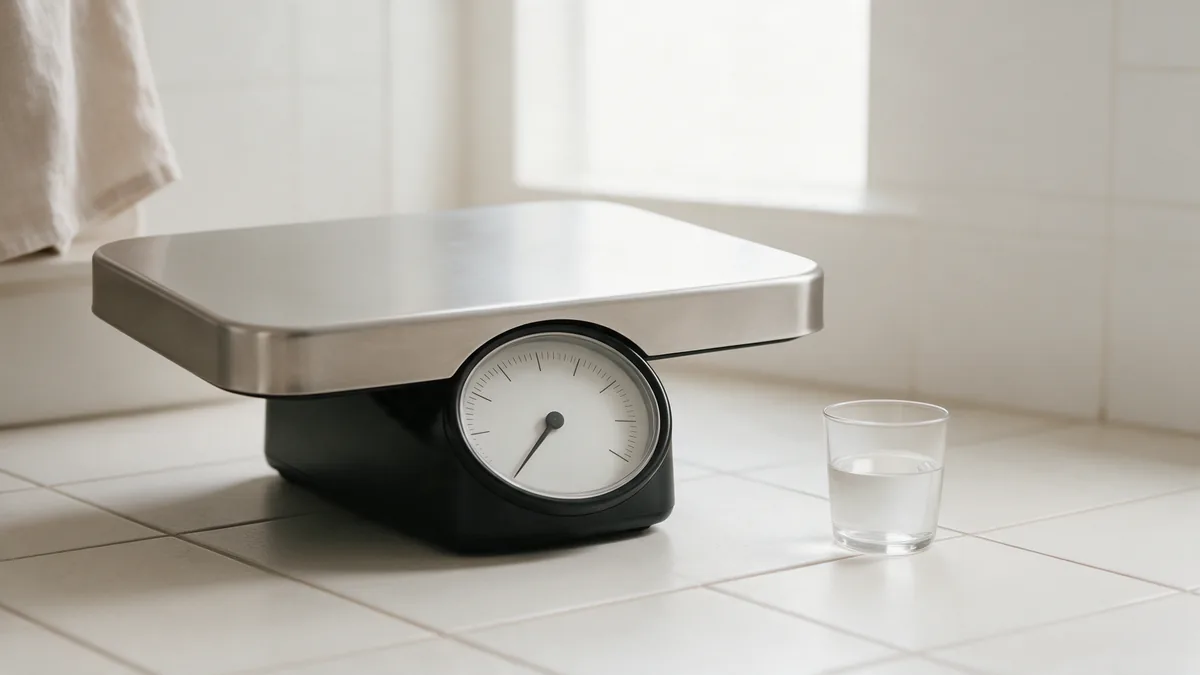
Does creatine make you fat? No. A 5 g dose contains almost no calories, and creatine has no mechanism for adding body fat. What it does do is pull water into your muscle cells, which adds 1 to 2 kg on the scale in the first few weeks. That is water, held inside the muscle where it makes you look fuller, not softer. And because creatine helps you keep strength and lean mass while eating less, it is arguably more useful during a cut than during a bulk. Here is the full picture.
Why the scale goes up on creatine
Creatine is osmotically active: where it goes, water follows. When your muscle creatine stores rise from around 70 percent to near 100 percent, the cells draw in extra water to keep everything in balance. The result is a gain of roughly 1 to 2 kg over the first one to four weeks, faster if you do a loading phase. The International Society of Sports Nutrition describes this as the one consistent side effect of creatine — and notes that it is water, not fat.
This water sits inside the muscle cell, not under the skin. Visually, muscles look fuller and slightly larger. It does not produce a puffy face or a softer midsection, which is what people usually mean by "getting fat".
Creatine and belly fat
Creatine cannot cause belly fat. Body fat is gained from a sustained calorie surplus and nothing else. Creatine provides about zero calories. If you started creatine at the same time as you started eating more — which is common, because people begin supplements when they begin a new training push — the extra food is the cause, not the powder.
Some people do report a bloated feeling in the first week, particularly during a 20 g per day loading phase. This is temporary stomach and gut water, not fat, and it usually resolves within days. Skipping the loading phase and taking 3 g to 5 g daily avoids it almost entirely. We cover this in more detail in creatine bloating and water retention.
Creatine for weight loss and cutting
This is the part that surprises people. When you eat in a deficit to lose fat, the risk is losing muscle and strength along with it. Creatine directly counters that risk: it keeps your muscle stores fuelled so you can maintain training intensity, and better-preserved training means better-preserved muscle. Several studies show creatine users retain more lean mass and strength during a calorie deficit than non-users.
Creatine is not a fat burner. It does not raise metabolism or burn calories on its own. But muscle is metabolically active tissue, and keeping more of it while you diet supports both your appearance and your metabolic rate at the end of the cut. For most people trying to lose fat while training, creatine is worth keeping in.
What the scale means while cutting on creatine
If you start creatine and a diet at the same time, the scale can be confusing: water weight from creatine going up while fat goes down. Two things help. First, judge progress over four to six weeks rather than days. Second, use a tape measure and photographs alongside the scale — waist circumference will fall even if body weight is flat for the first fortnight. Once creatine stores are saturated, the water weight stops rising and the scale tracks fat loss normally.
Does creatine cause weight gain long-term?
Beyond the initial water, any further weight gain on creatine is muscle built from training — which is the point. Creatine does not keep adding water indefinitely; the 1 to 2 kg is a one-time shift that stays while you take it and reverses within a few weeks if you stop. It does not cause fat gain at any duration of use.
Who should think twice
If you compete in a weight-class sport and are close to a limit, the 1 to 2 kg of water is real weight on the scale, and you may want to time creatine around weigh-ins or simply accept the trade-off for the strength benefit. For everyone else, the water is either neutral or a visual benefit.
The bottom line
Creatine does not make you fat. It adds a small amount of water to your muscles, which is the visible sign it is working, and it helps you hold on to muscle when you are dieting. If you want to lose fat, keep the creatine and fix the food. Choose a plain creatine monohydrate with no added sugar or fillers — flavoured creatines with sugar do add calories, so check the label. Every Coremax flavour is zero sugar and batch-tested, made in an FSSAI-licensed facility. Sizes and flavours are on our creatine page.
Frequently asked questions
Does creatine make you fat?
No. Creatine has almost no calories and no mechanism for adding fat. The early weight gain of 1 to 2 kg is water inside muscle cells.
Why did I gain weight after starting creatine?
Creatine draws water into muscle as stores fill, adding roughly 1 to 2 kg over the first few weeks. It is water, not fat, and it stops rising once stores are saturated.
Does creatine cause belly fat or bloating?
It does not cause belly fat. Some people feel bloated during a high-dose loading phase; taking 3 g to 5 g daily instead avoids this for most people.
Can I take creatine while trying to lose weight?
Yes. Creatine helps preserve muscle and strength during a calorie deficit, which is exactly what you want while losing fat. It is not a fat burner, but it supports a better cut.
Will I lose the water weight if I stop creatine?
Yes. Muscle creatine stores drain over four to six weeks after stopping and the extra water leaves with them.
Does flavoured creatine have calories?
Some do, if they contain sugar. Check the label. Sugar-free flavoured creatine and unflavoured creatine are effectively calorie-free.
Sources
- International Society of Sports Nutrition position stand: safety and efficacy of creatine supplementation
- Cleveland Clinic — Creatine
- Examine.com — Creatine evidence summary
Creatine is a food supplement, not a medicine, and does not treat, cure or prevent any disease. If you are pregnant or breastfeeding, have kidney or liver disease or diabetes, or take prescription medication, speak to a doctor before starting any supplement.